Mostrando entradas con la etiqueta México. Mostrar todas las entradas

13 de enero de 2021

Colocando duela I / Laying wooden floor I

¡Instalé una carpintería en toda regla para instalar las duelas!

I set up a carpenter´s workshop to lay the wooden floor!


Empecé por el vestidor y la "recámara de verano".

I started at the dressing room and the "summer bedroom"


Continué en la sala. Primero colocaba cintas de madera taqueteadas al piso y encima clavé la duela. De esta manera, espero varios beneficios:

* que haya buena ventilación

* que los bichos tengan donde vivir

* y que la duela rechine y cruja todo el tiempo. ¡Como en la casa que habité de niño!


I continued at the living room. First I placed wooden strips anchored to the floor. On top, I nailed the wooden floor. I expect following benefits:

* good ventilation

* that the creeters have a nice dark place to live in

* and that the floor squeaks and rattles all the time. As in the house I lived as a kid!


Fue muy laborioso hacer coincidir la duela con el piso cerámico ya existente. Había grandes diferencias de alturas y contornos. 

It was hard work to align the wooden floor with the already existing ceramic floor. There were big differences in level (heights) and contour.


¡¡¡Cortando el último pedacito de duela!!!

Cutting the very last piece!!!!


¡¡y quedó!!

And it is finished!!!


23 de mayo de 2020

Alise con huevos/ Alis with eggs

 Pero... ¿qué hacen la harina, los huevos y el engrudo mezclados con la tierra? ¡¡Pues "ALISE"!!

But... what why are flour, eggs and wheat paste mixed with earth? Obviously "ALIS"!!


El ALISE es una técnica que se usó en la colonias españolas de América para alisar los muros. De ahí su nombre: con el ALISE alisas muros. 
Su elaboración es muy sencilla: preparar una pasta de engrudo y mezclar con arena o tierra finamente cernida al tamaño deseado. Resulta un ALISE espeso que es untable con la mano o bien aplicable con brocha. Es muy fácil y placentero aplicarlo a las paredes.
¿y los huevos? En realidad no se necesitan. Los agregué porque ya estaban caducos por varias semanas y los necesitaba tirar. Mejor los usé como pegamento. También se puede agregar espagueti viejo, quesos podridos, suero de leche o cualquier pegamento orgánico que mantenga los granitos de arena unidos.


ALIS is a technique used in the Spanish colonies in the Americas to smoothen and finish walls. ALIS comes from Spanish "alisar" and means to smoothen out.
The preparation is very easy: prepare some wheat paste and mix with finely sieved sand. You geat a thick paste that can be smeared by hand or applied with a brush. It is very easy and pleasurable to apply to the walls. 
And the eggs? They are not really required. I added them because they were very old and could not be consumed anymore. They worked fine as glue. Other binders can be old spaguetti, rooten cheese, buttermilk or any other organic glue that keeps the sand grains together.


Hoy usé una receta de Sigi Koko, quien me ha inspirado para muchas técnicas de construcción natural:

Today I used a recipe from Sigi Koko, who has inspired me for many natural building techniques:


A continuación algunas fotos de la preparación:

Some pics of the preparation:


¡La consistencia es muy agradable y táctil!

The consistency is very pleasant and nice to touch!


La aplicación con brocha es muy rápida y fácil. Una vez que se secó el ALISE, le pasé la aspiradora para quitar los granos grandes y sueltos. De esa manera no estará soltando polvo más tarde.

The spreading is very quick and easy with a brush. After the ALIS was dry, I passed the vacuum cleaner to remove the big and loose sand grains. This should prevent the dusting off.


11 de abril de 2020

Estufa tipo cohete 9 / Rocket mass heater 9

En la épica Fiesta del Fuego, mis amigos me ayudaron a "hacer el trabajo sucio" de colocar cientos de kg de "cob" para llevar la banca cerca de sus dimensiones finales. Ahora haré el "trabajo limpio" del terminado.

At the epic Fire Party, my friends helped me with the "dirty job" of layimg hundreds of pounds of "cob" to take the bench close to its final dimensions. I am doing now the "clean job" of the finish.


Establecí el nivel final y lo marqué con listones de madera para rellenar donde hiciera falta.

I defined the final level and set it with wooden strips to fill wherever needed.


Hay una zona donde necesito poder pisar la banca para poder accesar a los páneles eléctricos. Ahí puse unas bonitas piedras laja de color rojo.

There is an area where I need to step on the bench to access the electricity panels. There I laid some beautiful red and thin stones .


Fue muy laborioso rellenar con cob la zona de la chimenea.

It took a lot of effort to fill with cob the area of the chimney.


Ahora a revestir el cob para lograr un terminado más suave.

Now render the cob to reach a smoother finish.


El resultado es bueno y bonito. Peeeero... aun falta la capa final. ¿de qué color? ¿con qué técnica? 
¿Un simple repellado de cal con arena? ¿le agrego pigmentos?
¿me aventuro con con cal bruñida o incluso con Tadelakt? ¿cómo se comportarán los diversos terminados al sucesivamente calentarse y enfriarse la banca? 
¡¡Pues vamos a experimentar!!!

The result is good and beautiful. Buuuuut.... the final layer is still missing. Which color? What technique? A simple render of lime with sand? Should I add some pigments?
Should I venture with burnished lime or even Tadelakt? How will the finish behave to succesive heating and cooling cycles of the bench?


Let´s make some trials!!!!


7 de marzo de 2020

La fiesta del fuego / The fire party

¡¡¡¡¡Todo está listo para la FIESTA DEL FUEGO!!!!!

Everything is ready for the FIRE PARTY!!!!!!!


A bailar al ritmo de sones veracruzanos para hacer cob!

Let´s dance to music from Veracruz and make cob!


¡¡Jóvenes y niños participaron con gran gusto!!

Young people and children joined us merrily!!


Y muy pronto empezamos a cubrir los ductos intercambiadores de calor con cob.

Amd soon we started to cover the heat exchanger ducts with cob.


¡¡¡Todos pusieron manos a la obra con sus dotes artísticas!!!

Everybody put hands to work with their artistic skills!!!


Otros se pusieron a sembrar plantas. ¡Aquí mi mamá!

Some others started planting. Here my mother!


Así se ve el lado este de la casa

Here is East side of the house.


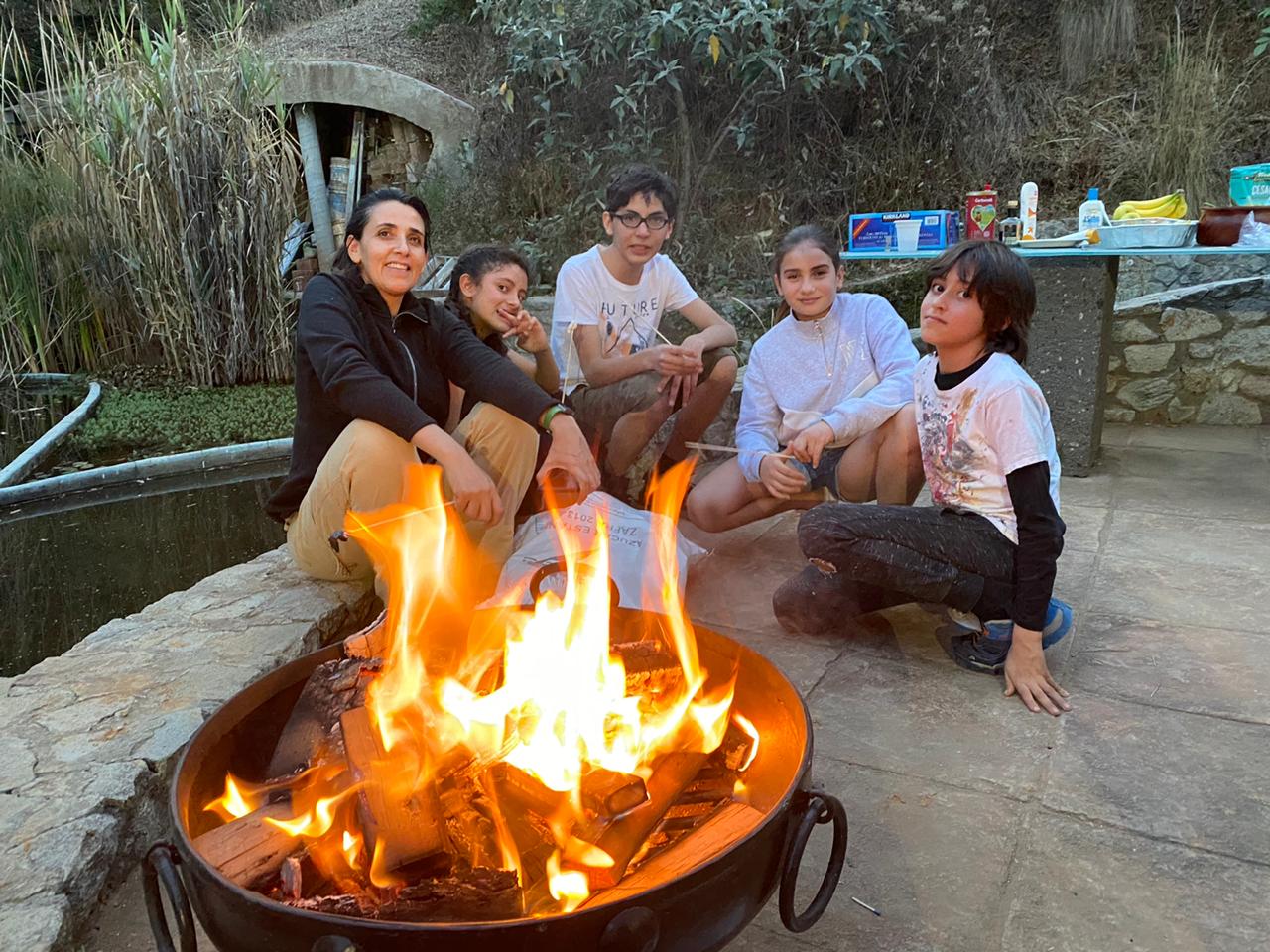
Al caer la tarde, asamos malvaviscos.

In the afternoon we prepared marshmallows


¡¡¡Fue un día maravilloso!!!
Gracias  a todos por venir y ayudarme con la estufa tipo cohete. Nos divertimos mucho y avanzamos en la construcción.

It was a wonderful day!!!
Thanks everybody for coming and help me with the rocket mass heater. We had great fun and made a lot of progress with building!

Gracias a Sebastián “ST”, Jorge y Vico por las fotos!
Thanks to Sebastián “ST”, Jorge and Vico for the pictures!


6 de marzo de 2020

Estufa tipo cohete 8 / Rocket mass heater 8

En las ocasiones en que prendí la estufa, se generó mucho humo y no se desalojó a través de la chimenea. El humo se regresó por la cámara de combustión y de ahí a la habitación. 
El humo siempre fue muy denso y frío. Para inspeccionar el sistema, quité el tambo de acero y encontré todo el  interior lleno de hollín:  el tiro interior, así como los ductos.

Every time I lighted the rocket mass heater, a lot of smoke was produced and it was not evacuated through the chimney. The smoke returned through the combustion chamber to the room.
The smoke was always dense and cold. For an inspection, I took off the steel barrel and found the heat riser, as the ducts full of soot,


¿cuál será la causa de este importante problema? Es claro que el humo pesado y denso no es el problema, sino la manifestación del mismo. Me puse a revisar mi libro de cabecera: "The Rocket Mass Heater" de Erica y Ernie Wisner. Tiene una muy amplia sección de solución de problemas.

Which may be the cause of this major problem? It is clear that the heavy and dense smoke is not the problem, but a mere result of it. I reviewed my reference book:  "The Rocket Mass Heater" by Erica and  Ernie Wisner. It has a very comprehensive troubleshooting section.


HIPÓTESIS 1: el tambo de acero al carbono transmite muy bien el calor. Esto provoca que los gases de combustión se enfríen mucho. Como los gases llegan fríos a la chimenea, ya no suben y no pueden ser desalojados.
Posible remedio: cambiar el tambo de acero al carbono por uno de acero inoxidable. La conductividad térmica del acero inoxidable (16 W/ m * K) es tres veces menor a la del acero al carbono (56 W / m * K)


HYPOTHESIS 1: the carbon steel barrel transmits heat very easily, This causes the combustion gases to cool down excessively.  Since the gases arrive cold to the chimney, the can´t rise anymore and are not extracted.
Possible solution: substitute the carbon steel barrel by a stainless steel barrel. The thermal conductivity of stainless steel (16 W/ m * K)  is three times lower than of carbon steel (56 W/ m * K) 


Coloqué el tambo de acero inoxidable en forma provisional y lo sellé simplemente con lodo. Al prender la estufa, el humo resultó un más caliente y se elevó mejor por la chimenea, pero no fue totalmente satisfactoria la solución.

I made a temporary installation of the stainless steel barrel and sealed it with mere mud. When lighting the stove, the smoke was slightly hotter and raised better through the chimney. However this solution was not completely satisfactory.


HIPÓTESIS 2: el intercambiador de calor es demasiado largo. Los gases de combustión pierden demasiado calor en su recorrido.
Posible solución: acortar los ductos del intercambiador de calor. 
¡Ufff! Ahora que ya estaban cubiertos con cob, hubo que retirar una buena capa para exponer los ductos que vamos a acortar.

 HYPOTHESIS 2 the heat exchanger is too long. The combustion gases lose too much heat in their journey.
Potential solution: make the ducts of the heat exchanger smaller.
Uffff! Now that they were already covered with cob, we had to take off a good layer to expose the ducts that will be shortened.


 Retiré dos secciones de tubo y cambié de lugar la "T" del registro. El recorrido de los gases es ahora dos metros más corto.

I took off two pipe sections and changed place of the "T" for the register. The travel distance ofthe combustion gases is aprox, 6.5 feet shorter now.


El resultado fue bastante mejor: la chimenea con un buen tiro, el humo se eleva alegremente. Tal vez se deba a la suma de las dos soluciones tomadas. Y sin embargo, no estoy satisfecho. La estufa no hace el ruido de cohete; no ruge.

The result was much better: the chimney has a good draft and the smoke climbs merrily, perhaps as a result of the two modifications. And still, I am not satisfied. The stove doesn´t make the rocket sound; it doesn´t roar.


HIPÓTESIS 3 y 4:  la distancia entre el tiro interno y el tambo no es suficiente. El volumen de la campana no es suficiente.
Subí el tambo unos diez centímetros. Ahora la distancia entre la chimenea interna y el tambo creció a 18 cm. Además, rebajé con el esmeril todos los ladrillos en el volumen interior de la campana.


HYPOTHESIS 3 and 4: the distance between the heat riser and the barrel is not enough. The volume of the bell is not big enough. 
I rose the barrel by some 4", increasing the height between the heat riser and the barrel to some 7 1/2 ". In addition I ground off the bricks in the interior of the bell.


¡El resultado es excelente! ¡la estufa ruge con sonoridad y sin titubeos!

The result is excellent! The rocket mass heater roars clearly and without hesitation!


Empiezo a tapar nuevamente los ductos con cob, pero serán varios cientos de kilogramos...
...necesito ayuda de mis amigos...
¡¡¡ORGANIZARÉ UNA FIESTA!!!!


I start anew covering the ducts with cob, but I will need some hundreds of pounds,,,
...I need some help from my friends...
I´LL PLAN A PARTY!!!!

Archivo del blog